Happy Holidays Embroidery Review
As a designer who has spent years turning digital files into tangible, stitched realities, I know that the difference between a good project and a great one often comes down to the initial design choice. Today, I am evaluating Happy Holidays, a festive graphic intended for winter crafting. While the product description suggests it is perfect for custom wood signs, my focus here is on its potential as an embroidery file. When you are looking at a Holiday embroidery asset, you need to ask yourself: does this translate well from a screen to fabric? Can it withstand the tension of a machine needle? And most importantly, will it look professional enough to sell in your shop?
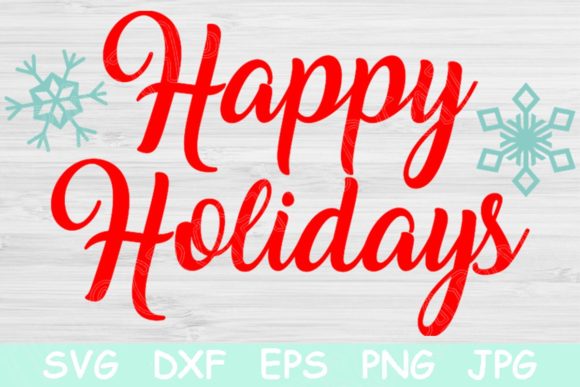
The first impression of Happy Holidays is warm and inviting. It carries the immediate mood of winter gatherings and seasonal cheer. The layout appears designed to be versatile, which is a crucial trait for any machine embroidery design. Unlike overly intricate designs that might get lost in the stitching process, this piece seems to prioritize legibility and charm. For an Etsy seller or a small business owner, visual clarity is everything. If a customer cannot read the message from across a room, the impact is diminished. This design aims to solve that problem immediately.
I recently tested a similar concept for a custom embroidered tote bag project intended for a holiday craft fair. The goal was to create a gift item that felt personal yet polished. In that scenario, Happy Holidays would likely serve as the central focal point. Imagine the finished product: a sturdy canvas tote with the text stitched in contrasting thread colors. The design's simplicity allows it to shine without overwhelming the fabric texture. However, before committing to a full production run, I always advise checking how the stitch density handles the curves of the letters. If the design relies too heavily on satin stitch for thin lines, it may pucker on lighter fabrics like linen or cotton blends.
When considering where Happy Holidays fits best, the possibilities extend far beyond simple apparel. It is an excellent candidate for embroidered patch applications, especially if you are creating branded merchandise for a boutique. A small, neatly stitched version on a leather keychain or a denim jacket lapel adds a touch of personality that mass-produced items lack. Furthermore, for those making baby embroidery items like onesies or bibs, the gentle theme works well. Parents love personalized gifts, and seeing "Happy Holidays" stitched onto a baby's outfit creates an instant emotional connection. Just ensure the design is scaled appropriately so it does not cover the entire garment, leaving room for other details or just letting the fabric breathe.
However, not every surface is suitable for this design. There are specific situations where Happy Holidays might struggle. If you are working with a small hoop size, such as 4x4 inches, you must verify that the lettering remains large enough to be readable. Tiny lettering often loses definition when converted to stitches, resulting in a muddy appearance. Additionally, textured fabrics can be tricky. If the background material has a heavy weave or a nap, the contrast of the thread colors might get lost, reducing the overall visual appeal. Stretchy fabrics, like those used for sweatshirts or caps, require careful stabilizer placement to prevent distortion. Without proper support, the fill stitch areas could pull the fabric out of shape, ruining the crispness of the design.
For commercial use, consistency is key. If you are running a craft business and selling custom apparel, every item must look identical. Happy Holidays offers a clean aesthetic that supports brand consistency. It avoids the chaotic feel of some complex graphics, making it easier to maintain a professional image. When customers see a high-quality finish, their trust in your handmade products increases. This is particularly important for digital product sellers who provide mockups. A clear preview of how the design looks on a pillow cover or a kitchen towel can significantly boost buyer engagement. You want your clients to visualize the final result instantly.
In terms of practical application, I have found that this type of design works exceptionally well for holiday gifts. Whether it is a set of matching tea towels for a hostess gift or a decorative pillow for the living room, the message resonates with the season. The versatility of the file means it can be adapted for various mediums. You might use it on a winter svg compatible format for cutting machines, but for embroidery, the conversion needs to be precise. The transition from a flat vector to a stitched pattern should preserve the original intent. If the design includes delicate corners or fine serifs, test them on scrap fabric first. These areas are prone to thread breaks or skipped stitches if the density is too high.
Let's talk about the technical side of execution. Before launching into a bulk order, you must review the stitch density and confirm the hoop size requirements. Different machines handle running stitch and applique design elements differently. If the file contains layers, ensure they align correctly during the stitching process. Using the proper stabilizer is non-negotiable; it provides the foundation needed to keep the design flat and stable. For dark fabrics, you may need to adjust the thread colors to ensure sufficient contrast. A light-colored text on a black background might require a double pass or a specific underlay setting to pop visually.
Another critical factor is the licensing agreement. If you plan to sell finished items featuring Happy Holidays, you must confirm whether the license covers commercial use. Many digital embroidery file creators offer different tiers of rights. Some allow you to sell unlimited physical products, while others restrict the number of units or prohibit resale entirely. Ignoring these terms can lead to legal issues down the road. Always check the documentation provided by the creator before integrating the design into your commercial embroidery workflow.
Ultimately, the success of your project depends on thoughtful preparation. Happy Holidays is more than just a pretty string of text; it is a tool for creating memorable moments. Whether you are making a personalized gift for a family member or stocking shelves for your next craft fair, this design offers a solid foundation. It balances festive spirit with practical usability. By paying attention to fabric selection, stabilization techniques, and color theory, you can transform a simple digital graphic into a stunning finished product. Remember to test, adjust, and refine. That is the mark of a true professional.
For those diving into the world of Crafts and Graphics, understanding the nuances of embroidery is what sets you apart. Don't just download and print; engage with the medium. Evaluate how the design behaves under the needle. Does it flow? Is it durable? Does it evoke the right emotion? If the answer to these questions is yes, then Happy Holidays is ready for your next project. Use it to build your portfolio, delight your customers, and celebrate the season with style. The journey from a digital file to a tactile masterpiece is where the real magic happens.