Kitchen and Food: A Designer's Review
When I first opened the Kitchen and Food collection, I wasn't just looking at a list of files; I was visualizing a potential bestseller on my Etsy shop. As an experienced designer who has stitched hundreds of designs on everything from stiff denim to delicate silk, my initial reaction is always practical: does this hold up under the needle? Does it translate well from a digital screen to a physical object? The answer for this set is a confident yes, provided you understand its strengths and limitations.
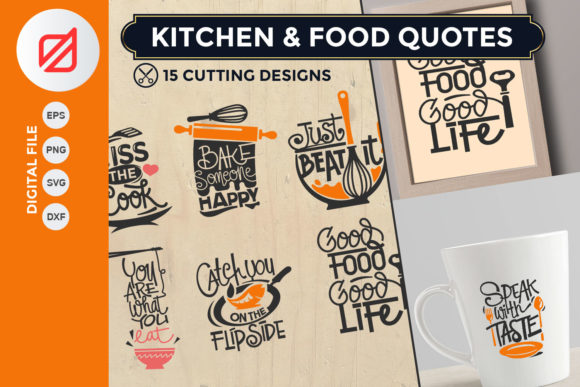
The collection features 15 individual quote designs that immediately establish a warm, inviting mood. Unlike generic clip-art that feels cold or corporate, these designs have a personality. They scream "home," "comfort," and "craftsmanship." When I imagine placing one of these quotes on a heavy cotton apron or a soft baby onesie, the design doesn't feel out of place; it feels like it belongs there. This natural fit is crucial for any machine embroidery design intended for commercial use, as customers buy into the story the product tells before they even touch the fabric.
Real-World Application: From Screen to Stitch
To truly test the Kitchen and Food graphics, I ran through a mental scenario involving a custom tote bag project. Imagine preparing a gift package for a local bakery owner. You want something unique that reflects their passion without being too literal. Using the SVG or EPS files included in this set, I could cut a patch to sew onto a canvas tote, or perhaps print the PNG version on high-quality paper to create a framed art print for their office wall.
If I were to switch to embroidery, the results would depend heavily on the stitch density and the chosen thread colors. For a sweatshirt, the bold lines of the text would stand out beautifully against a dark heather gray background. However, for a tea towel, the lighter threads might get lost if the fabric texture is too coarse. This is where the versatility of having multiple file formats comes into play. The ability to use the DXF files with a cutting machine opens up possibilities for appliqué work, adding a layer of dimension that standard satin stitches simply cannot achieve.
I also considered how these designs would perform on smaller items, such as baby clothes or caps. The quote-based nature of the Kitchen and Food set makes them perfect for personalized gifts. A mother buying a handmade gift for a new parent often looks for something sentimental yet stylish. These designs hit that sweet spot. They are not overly cutesy, which allows them to age well as the child grows, making them suitable for nursery decor or long-term keepsakes.
Navigating Technical Challenges
While the aesthetic appeal is strong, every professional knows that execution is everything. There are specific scenarios where Kitchen and Food requires careful handling. If you are working with small hoop sizes, you must be vigilant about the lettering. Tiny details can sometimes disappear when compressed into a 4x4 inch hoop, especially if the font has thin serifs or intricate flourishes. Always inspect the small details on your screen before hooping the fabric.
Fabric choice is another critical factor. Stretchy fabrics like jersey or thin knits can distort dense stitch areas, causing puckering that ruins the clean look of the design. In these cases, using a proper stabilizer is non-negotiable. Without adequate support, the tension of the threads will pull the fabric out of shape, turning a beautiful quote into a wrinkled mess. Similarly, textured fabrics like terry cloth or heavy wool can hide the definition of the stitches, making the design look muddy rather than crisp.
Dense stitch areas are another point of caution. If a design relies heavily on fill stitches, it may become too stiff for certain applications, like a pillow cover that needs to remain soft to the touch. Conversely, if the design uses too much running stitch, it might lack the durability needed for items that will undergo frequent washing, such as kitchen towels or work aprons. Before committing to a full production run, I strongly advise testing the design on scrap fabric to check the balance between stitch density and fabric flexibility.
Impact on Brand and Customer Trust
In the world of craft business and Etsy seller communities, presentation is half the battle. A poorly executed embroidery job can signal amateurism, while a clean, precise finish builds brand consistency and customer trust. The Kitchen and Food collection offers a level of clarity that helps maintain a professional image. When a customer receives a personalized gift with sharp, legible text and balanced spacing, they perceive the value of the item higher.
This design set also enhances the "giftability" of your products. Whether you are creating holiday gifts, wedding favors, or boutique branding, the thematic relevance of food and kitchen quotes resonates with a wide audience. It triggers an emotional connection related to home cooking and family gatherings. For digital product sellers, the inclusion of PNG files for printable mockups allows you to showcase these designs realistically in your listings, helping buyers visualize the final product before purchasing.
However, visual appeal alone isn't enough. You must consider the longevity of the finished product. Designs with high contrast thread colors generally last longer and resist fading better over time. When selecting thread colors for Kitchen and Food, avoid combinations that might blend together too much, such as light gray on white, unless you are aiming for a subtle, tonal look. Darker backgrounds require brighter or metallic threads to ensure the text pops and remains readable after multiple washes.
Essential Notes for the Embroidery Designer
Before you start stitching, remember that technology varies by machine. While the files are versatile, they are not magic. You need to verify the hoop size requirements for each specific design within the collection. Some quotes might be wider than others, requiring a larger frame or a multi-needle setup to accommodate the width comfortably.
Always review the stitch density settings in your digitizing software. If the design feels too tight, adjust the settings to reduce the number of stitches per inch, which can prevent fabric distortion. If it feels too loose, increase the density slightly to ensure coverage. Don't forget to test the design in black and white mockups; this removes the distraction of color and lets you focus purely on the composition and layout.
Licensing is a legal matter that cannot be overlooked. If you plan to sell finished items made with these designs, confirm the terms of use. Some licenses allow for unlimited personal projects but restrict commercial sales, while others offer a clear path to selling handmade goods. Check the documentation carefully to ensure you are compliant with the Crafts and Graphics usage guidelines provided by the creator.
Finally, embrace the iterative process. Your first attempt might not be perfect, and that is okay. Use the Kitchen and Food collection as a foundation for your creativity. Experiment with different thread types, mix and match the 15 quotes to create unique phrases, and combine them with other elements to tell a richer story. By approaching these designs with a critical eye and a willingness to test, you can transform simple digital files into tangible, cherished handmade products that bring joy to your customers.